Detergent Alkaline Protease Unit JECFA Process Guide
B2B guide to alkaline protease units, laundry detergent dosing, QC, pilot validation, cost-in-use, and supplier qualification.
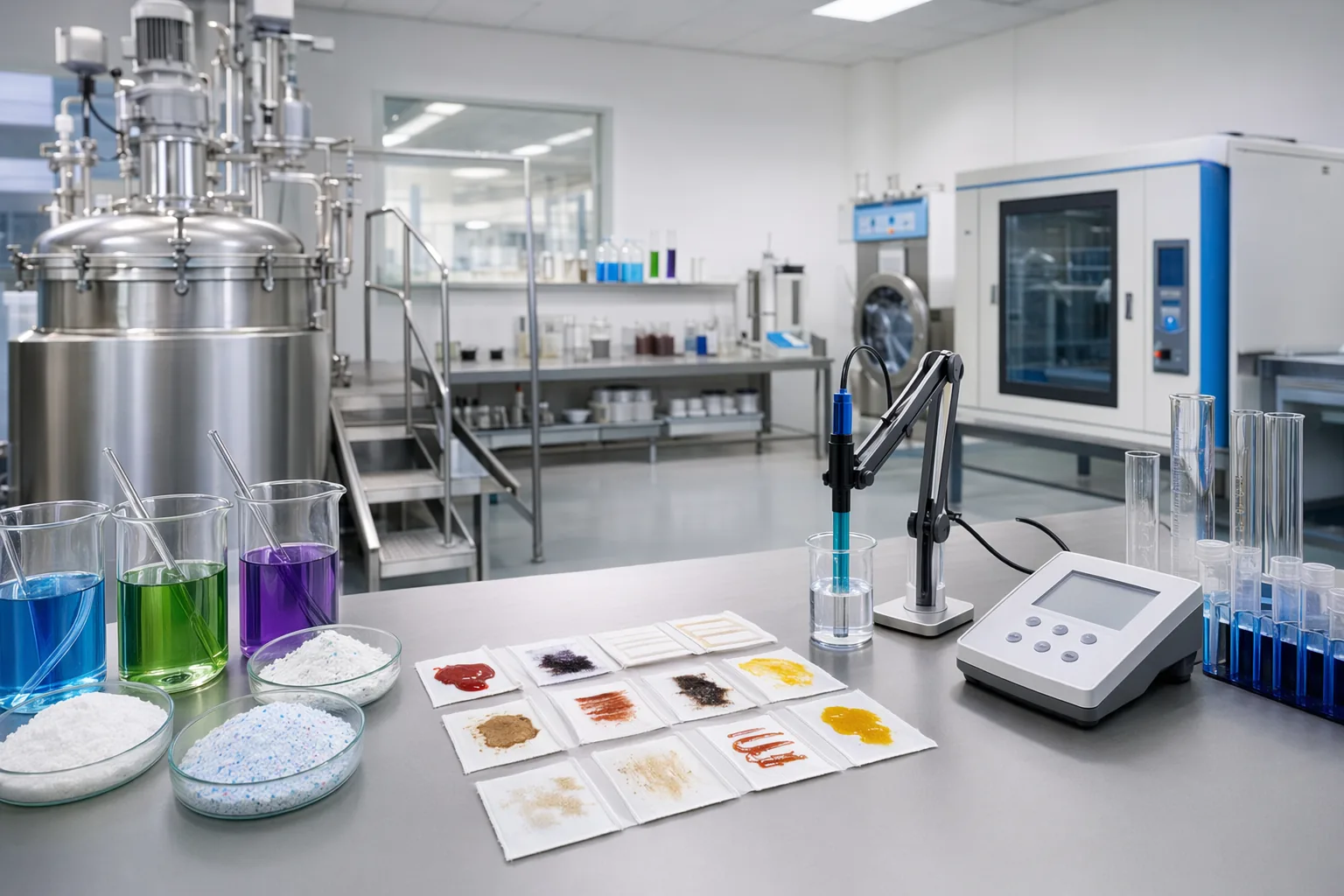
A practical procurement and formulation guide for evaluating alkaline protease enzyme activity, detergent compatibility, and cost-in-use for laundry detergent manufacturing.
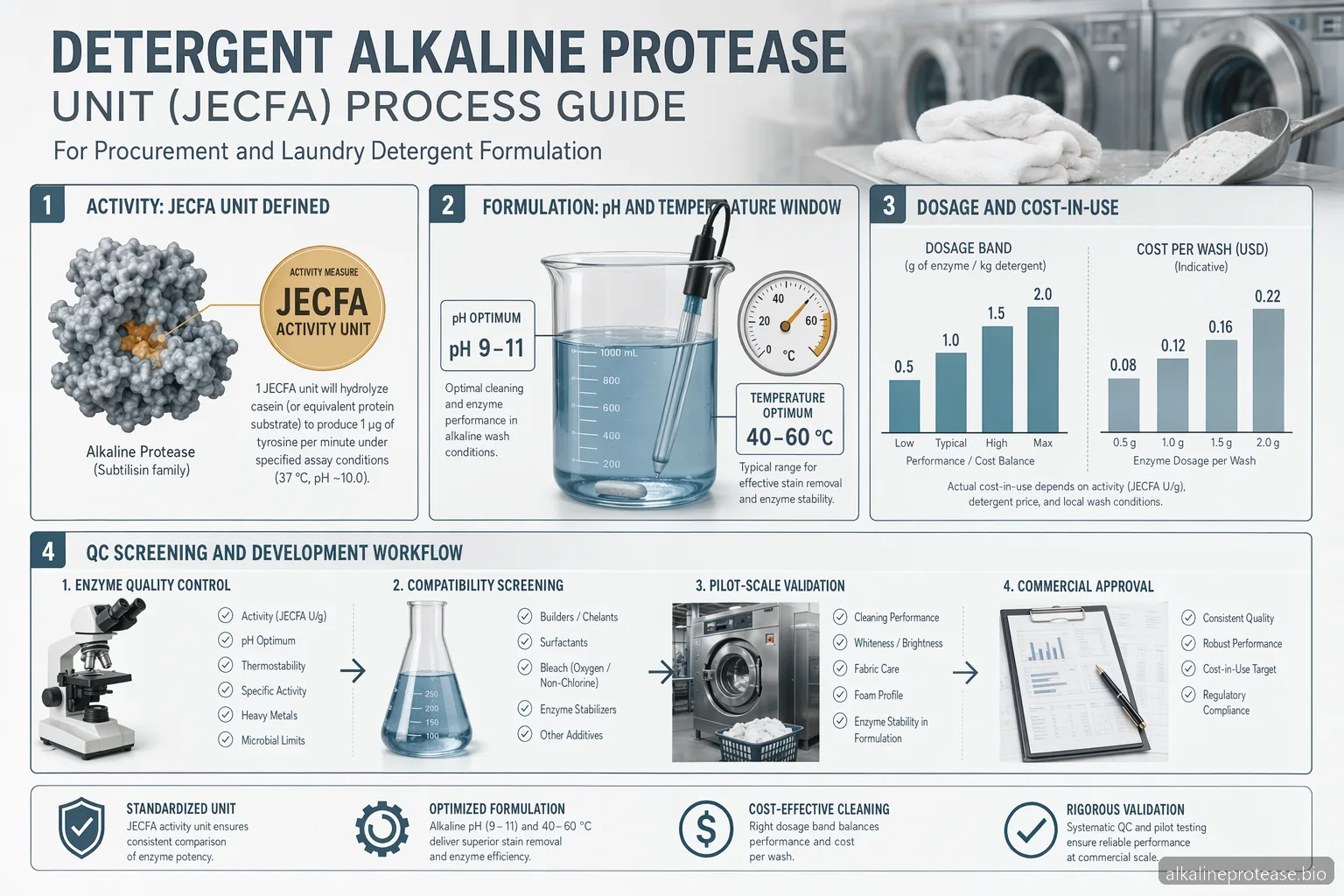
What the JECFA unit question means for detergent buyers
The search phrase detergent alkaline protease unit jecfa often reflects a real purchasing problem: how to compare activity values from different alkaline protease suppliers. JECFA publishes specifications for certain enzyme preparations used in food processing, but it does not create one universal activity unit for every detergent alkaline protease. Laundry detergent buyers should therefore treat unit numbers as assay-dependent, not automatically interchangeable. A protease declared at one activity level by casein hydrolysis, azocasein, Folin, or another method may not equal the same numerical activity from another supplier. For industrial alkaline protease laundry detergent projects, the commercial decision should combine COA activity, TDS assay method, formulation compatibility, pilot washing data, and delivered cost per functional wash. This is especially important for subtilisin-type alkaline protease, where performance is shaped by pH, temperature, surfactants, builders, bleaching systems, and granule protection.
Request the exact assay method behind every activity unit. • Compare performance in your detergent, not only in buffer. • Use JECFA references only where they are relevant to the intended market.
Target conditions for laundry detergent formulation
An industrial alkaline protease enzyme laundry detergent is normally selected for high activity under alkaline wash conditions. Typical formulation screening examines activity around pH 8.5 to 11.0, with many laundry washes operating near pH 9.5 to 10.5. Temperature testing should include local consumer use conditions, commonly 20 to 60 °C, and may include short exposure at higher temperatures for process stress testing. Compatibility checks should cover anionic and nonionic surfactants, carbonate or silicate builders, chelants, optical brighteners, fragrance systems, preservatives, and any oxidizing components. In powder detergents, enzyme granule integrity, dust level, moisture uptake, and segregation are critical. In liquids, water activity, borate-free stabilization, calcium balance, polyols, and protease self-digestion control may be more important than initial activity alone.
Screen pH 8.5–11.0 for alkaline wash relevance. • Test 20–60 °C to cover cold, warm, and hot wash markets. • Check both powder and liquid stability if the product portfolio requires both.
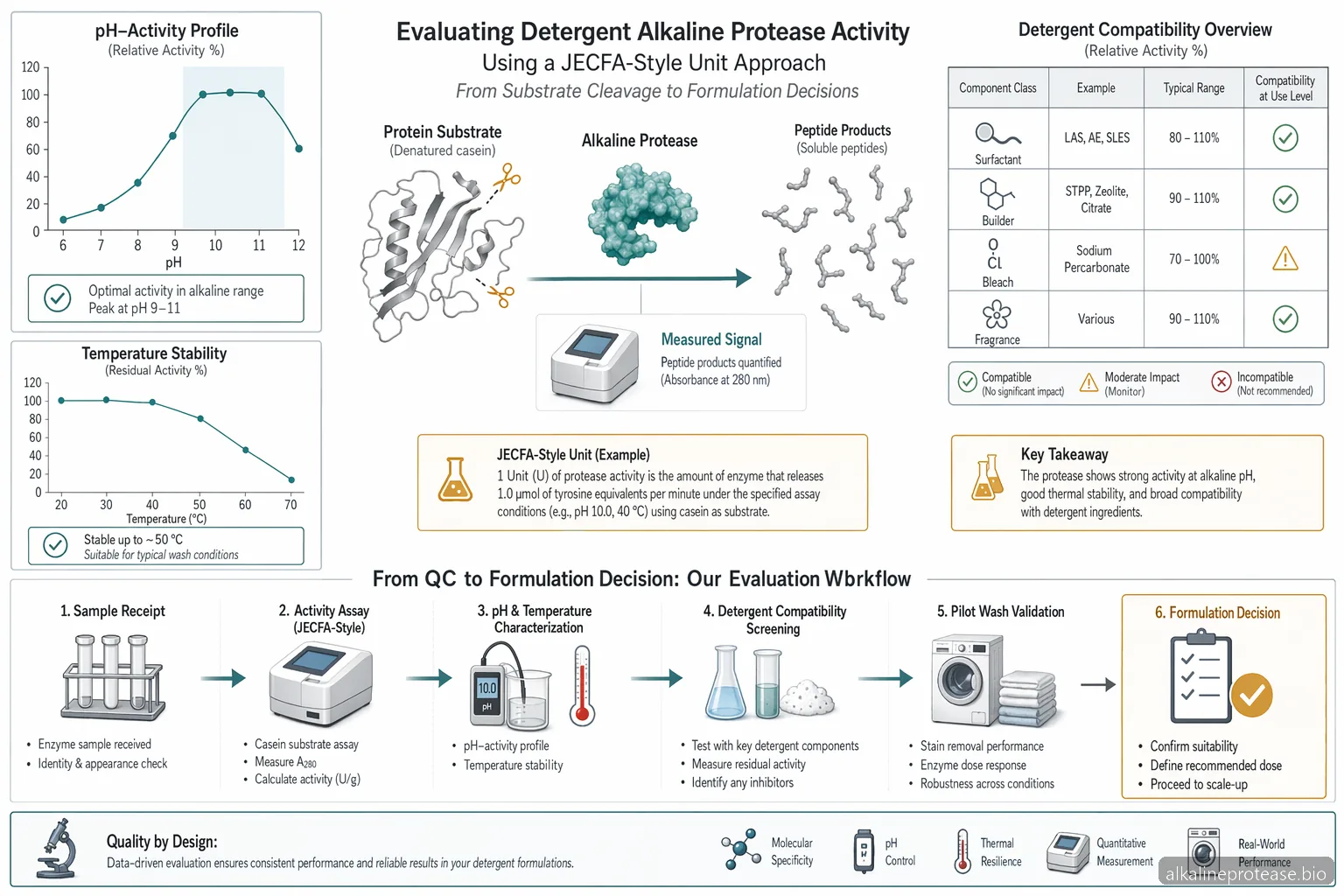
Dosage bands, unit conversion, and cost-in-use
Practical dosage for alkaline protease detergent depends on enzyme potency, wash dose, soil load, local water hardness, product format, and label performance targets. For initial lab work, formulators often screen several inclusion levels rather than relying on one theoretical unit conversion. A typical approach is to test low, medium, and high active-enzyme bands against proteinaceous stains such as blood, egg, milk, grass, and body soil, then calculate cost per wash at equal stain-removal performance. Because activity units are assay-specific, procurement should avoid comparing price per kilogram alone. Instead, normalize each candidate by declared COA activity, expected activity retention after processing, storage stability, and delivered application result. This approach prevents overpaying for a higher headline unit value that does not survive the detergent matrix or wash cycle.
Evaluate price per functional wash, not only price per kilogram. • Use the same stain set and wash protocol for all suppliers. • Confirm activity retention after storage and processing.
QC checks and screening workflow for detergent protease
A robust QC program links enzyme receipt testing with formulation performance. Incoming lots should be checked against the COA for activity, appearance, moisture or loss on drying where applicable, particle size for granules, and microbiological limits when relevant to the buyer’s internal standard. A simple screening workflow can also support R&D projects related to alkaline protease-producing bacteria from detergent soil. Searches such as flow chart for alkaline protease producing bacteria from detergent soil, flow chart for alkaline protease activity from contaminated detergent, and detection of alkaline protease and pcr from detergent contaminated soil usually describe academic discovery workflows. Industrial detergent manufacturers, however, should separate strain screening from commercial supply qualification. For procurement, the more important flow is sample receipt, activity confirmation, matrix compatibility, pilot washing, storage testing, cost analysis, and approved supplier listing.
Match QC activity testing to the supplier’s declared method. • Separate research strain discovery from commercial enzyme approval. • Keep retained samples for batch comparison and complaint investigation.
Pilot validation before scale-up
Pilot validation should reproduce the stresses that the enzyme will face in manufacturing, storage, distribution, and consumer washing. For powders, test enzyme granule addition point, mixing time, dust control, segregation tendency, and activity loss after exposure to alkaline builders and moisture. For liquids, evaluate viscosity change, phase stability, odor, preservative compatibility, and residual protease activity during accelerated and real-time storage. Wash trials should compare stain-removal performance against an enzyme-free control and against the current commercial benchmark, if one exists. Use standardized fabric swatches and consumer-relevant soils, then confirm that gains in protein stain removal do not create unacceptable fabric damage, color change, or formulation instability. Pilot data should feed directly into dosage selection, cost-in-use modeling, and final supplier negotiation.
Run both accelerated and real-time storage checks. • Include enzyme-free and current-formula controls. • Document wash performance before purchase commitment.
Adjacent applications and supplier fit
Although this page focuses on industrial alkaline protease detergent laundry detergent, many buyers also compare enzyme suitability for industrial alkaline protease detergent leather processing and industrial alkaline protease detergent silk degumming. These applications can use alkaline protease, but the performance requirements differ. Leather processing may prioritize controlled unhairing, bating, fiber opening, and reduced harsh chemical load under tannery-specific pH and temperature conditions. Silk degumming may require selective sericin removal while protecting fibroin strength and handle. A supplier strong in laundry detergent may not automatically be the best fit for leather or silk. Ask whether the producer has separate application data, recommended process windows, and QC specifications for each market. This prevents cross-application assumptions and helps procurement select the correct enzyme grade, format, and technical support package.
Do not transfer detergent dosage directly to leather or silk. • Request application-specific TDS guidance. • Confirm enzyme grade, carrier, and stability package for each use.
Documents to request from an alkaline protease supplier
Before approving an alkaline protease enzyme for detergent production, request a complete technical and compliance package. The TDS should state enzyme type, activity definition, assay method, recommended pH and temperature range, dosage guidance, storage conditions, shelf life, and formulation cautions. The SDS should cover handling, respiratory sensitization precautions, spill response, personal protective equipment, and transport information. Each shipment should include a COA with batch number, activity, manufacturing or release date, and any agreed physical or microbiological parameters. B2B buyers should also ask about allergen handling statements where relevant, traceability, change-control notification, sample retention, complaint procedure, and lead time reliability. Avoid relying on unverifiable claims; supplier qualification should be based on documents, pilot results, and consistent commercial batches.
Request TDS, SDS, and batch COA before scale-up. • Confirm change-control and traceability procedures. • Approve suppliers through documented pilot validation.
Technical Buying Checklist
Buyer Questions
No. JECFA specifications can be relevant to certain enzyme preparations, especially in food-related contexts, but detergent alkaline protease activity is usually reported according to the supplier’s own validated assay. Buyers should compare the unit definition, substrate, pH, temperature, reaction time, and calculation method. Final approval should be based on detergent performance and cost-in-use, not the unit name alone.
A practical screening range is pH 8.5 to 11.0 and 20 to 60 °C, adjusted to the target market’s wash habits. Cold-wash detergents need strong low-temperature performance, while heavy-duty powders may require greater alkaline and storage stability. Always test in the complete detergent matrix, because buffer activity does not guarantee survival with surfactants, builders, fragrance, and moisture.
Ask each supplier for the TDS assay method and a batch COA, then normalize candidates through the same internal wash test. Compare stain removal at equal finished-detergent dose, activity retained after storage, handling properties, and delivered cost per wash. If the unit methods differ, do not convert mathematically unless both assays have been correlated through your own validation data.
Request the technical data sheet, safety data sheet, certificate of analysis, shelf-life statement, storage guidance, and change-control policy. The COA should identify the batch and declared activity. The TDS should explain the activity unit, recommended pH and temperature range, dosage guidance, and compatibility notes. These documents support supplier qualification, pilot validation, and repeatable production control.
Sometimes the same enzyme family can serve multiple industries, but the optimized grade and process conditions are not automatically the same. Laundry detergent focuses on stain removal and formulation stability. Leather processing requires controlled action on hides, while silk degumming requires selective sericin removal without excessive fibroin damage. Request application-specific data before transferring dosage or process conditions.
Alkaline Protease for Research & Industry
Need Alkaline Protease for your lab or production process?
ISO 9001 certified · Food-grade & research-grade · Ships to 80+ countries
Frequently Asked Questions
Does JECFA define a universal detergent alkaline protease unit?
No. JECFA specifications can be relevant to certain enzyme preparations, especially in food-related contexts, but detergent alkaline protease activity is usually reported according to the supplier’s own validated assay. Buyers should compare the unit definition, substrate, pH, temperature, reaction time, and calculation method. Final approval should be based on detergent performance and cost-in-use, not the unit name alone.
What pH and temperature should be used to test alkaline protease for laundry detergent?
A practical screening range is pH 8.5 to 11.0 and 20 to 60 °C, adjusted to the target market’s wash habits. Cold-wash detergents need strong low-temperature performance, while heavy-duty powders may require greater alkaline and storage stability. Always test in the complete detergent matrix, because buffer activity does not guarantee survival with surfactants, builders, fragrance, and moisture.
How should we compare two alkaline protease suppliers with different activity units?
Ask each supplier for the TDS assay method and a batch COA, then normalize candidates through the same internal wash test. Compare stain removal at equal finished-detergent dose, activity retained after storage, handling properties, and delivered cost per wash. If the unit methods differ, do not convert mathematically unless both assays have been correlated through your own validation data.
What documents are needed before buying industrial alkaline protease enzyme laundry detergent grade?
Request the technical data sheet, safety data sheet, certificate of analysis, shelf-life statement, storage guidance, and change-control policy. The COA should identify the batch and declared activity. The TDS should explain the activity unit, recommended pH and temperature range, dosage guidance, and compatibility notes. These documents support supplier qualification, pilot validation, and repeatable production control.
Can the same alkaline protease be used for laundry detergent, leather processing, and silk degumming?
Sometimes the same enzyme family can serve multiple industries, but the optimized grade and process conditions are not automatically the same. Laundry detergent focuses on stain removal and formulation stability. Leather processing requires controlled action on hides, while silk degumming requires selective sericin removal without excessive fibroin damage. Request application-specific data before transferring dosage or process conditions.
Related: Alkaline Protease for Detergent and Laundry Formulation
Turn This Guide Into a Supplier Brief Request COA, TDS, SDS, and a pilot sample to validate alkaline protease cost-in-use in your detergent formulation. See our application page for Alkaline Protease for Detergent and Laundry Formulation at /applications/alkaline-protease-detergent-laundry/ for specs, MOQ, and a free 50 g sample.
Contact Us to Contributehello@mail.alkalineprotease.bio