Bacterial Alkaline Proteases Molecular Approaches and Industrial Applications
Source bacterial alkaline protease for laundry detergent with pH, temperature, dosage, QC, COA/TDS/SDS and pilot validation guidance.
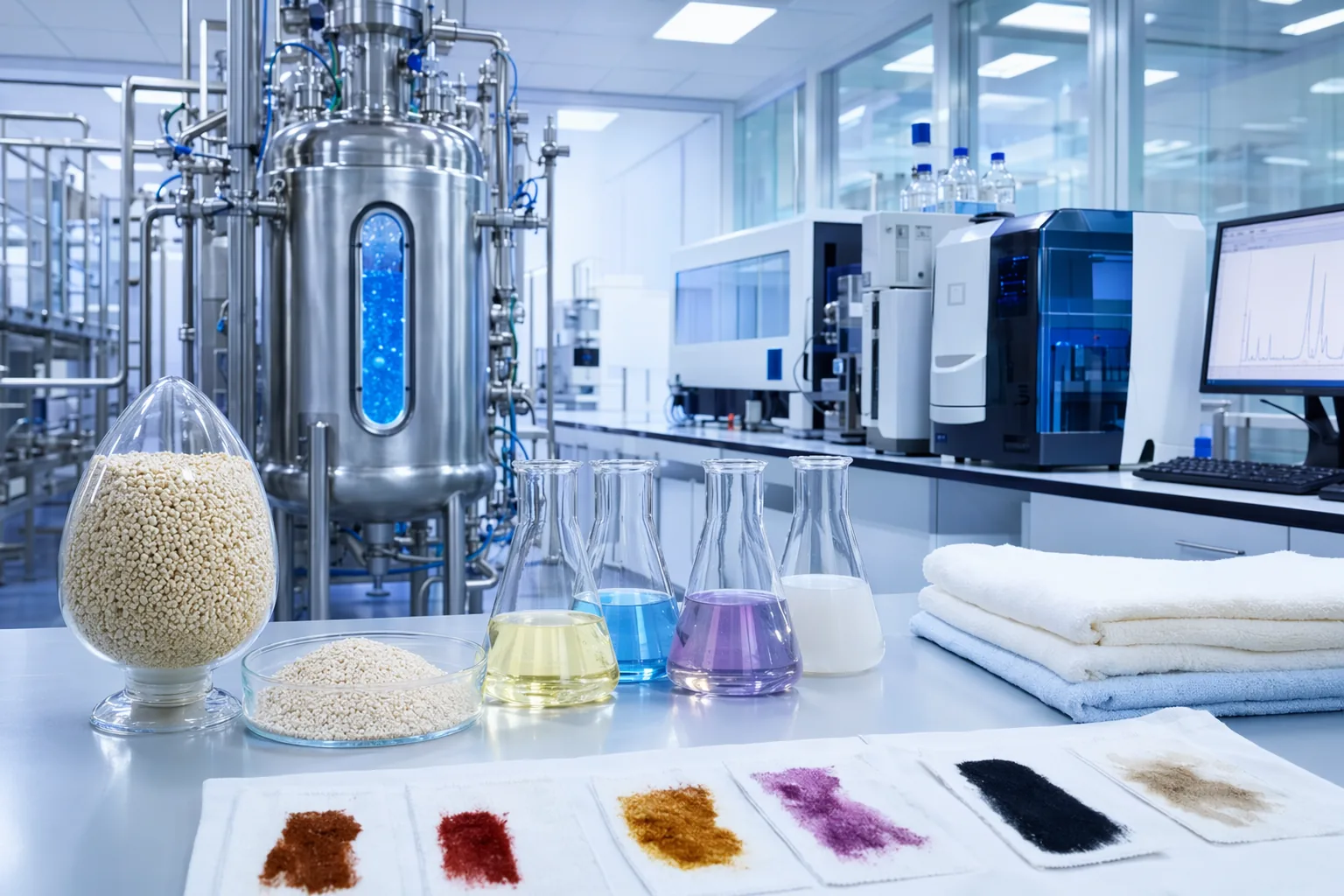
A practical B2B supplier guide for detergent manufacturers evaluating bacterial alkaline protease for stain removal, formulation stability, pilot trials and cost-in-use.
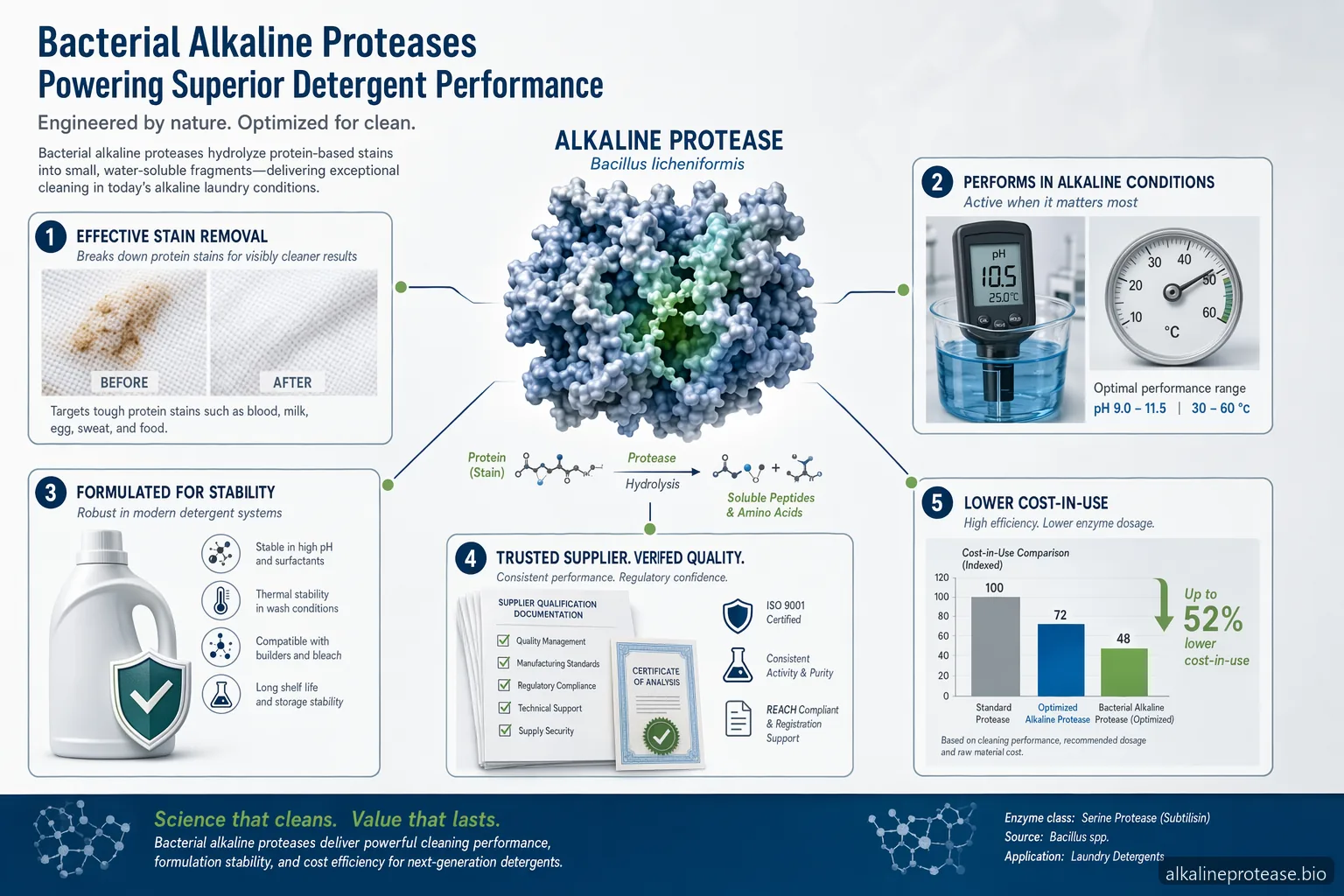
Why detergent buyers specify alkaline protease
Alkaline protease enzyme is a core biocatalyst for laundry detergent because many household soils contain proteins such as blood, egg, dairy, grass and sweat residues. In alkaline wash liquor, the enzyme hydrolyzes peptide bonds into smaller, more soluble fragments that surfactants can lift from fabric. For buyers, the main question is not whether alkaline protease works, but whether a specific bacterial alkaline protease fits the detergent base, wash temperature, consumer dosing pattern and shelf-life target. Subtilisin-type proteases are widely used because they operate effectively in alkaline pH and can be produced at industrial scale by microbial fermentation. A procurement specification should connect enzyme activity to the actual detergent format, including powder, tablet, liquid or unit-dose systems. This prevents overbuying activity that is lost during storage or underdosing activity that fails in stain panels.
Typical wash pH target: about pH 8.5 to 11 • Common evaluation temperature range: 20 to 60°C • Primary value driver: protein stain removal per unit detergent cost • Key risk: loss of activity from oxidants, moisture, high pH liquids or incompatible additives
Molecular approaches that influence industrial performance
The phrase bacterial alkaline proteases molecular approaches and industrial applications covers the link between enzyme origin, production method and practical use. Industrial suppliers commonly use selected bacterial strains, controlled submerged fermentation and downstream stabilization to deliver consistent alkaline protease batches. Molecular approaches may include strain screening, mutagenesis, recombinant expression, protein engineering and fermentation optimization. These methods can improve yield, alkaline tolerance, thermal profile, oxidation resistance or compatibility with detergent ingredients. However, buyers should treat these claims as technical starting points rather than guaranteed detergent performance. Request comparative data generated in relevant wash conditions and verify it in your own formulation. Microbial alkaline proteases importance comes from their scalable production and broad alkaline activity, but final selection still depends on your surfactant system, builders, bleach chemistry, fragrance, water hardness and storage requirements.
Ask whether the enzyme is a subtilisin or another alkaline serine protease type • Confirm whether activity is measured against a casein, azocasein or supplier-specific substrate • Compare lots using the same analytical method • Require disclosure of handling precautions in the SDS
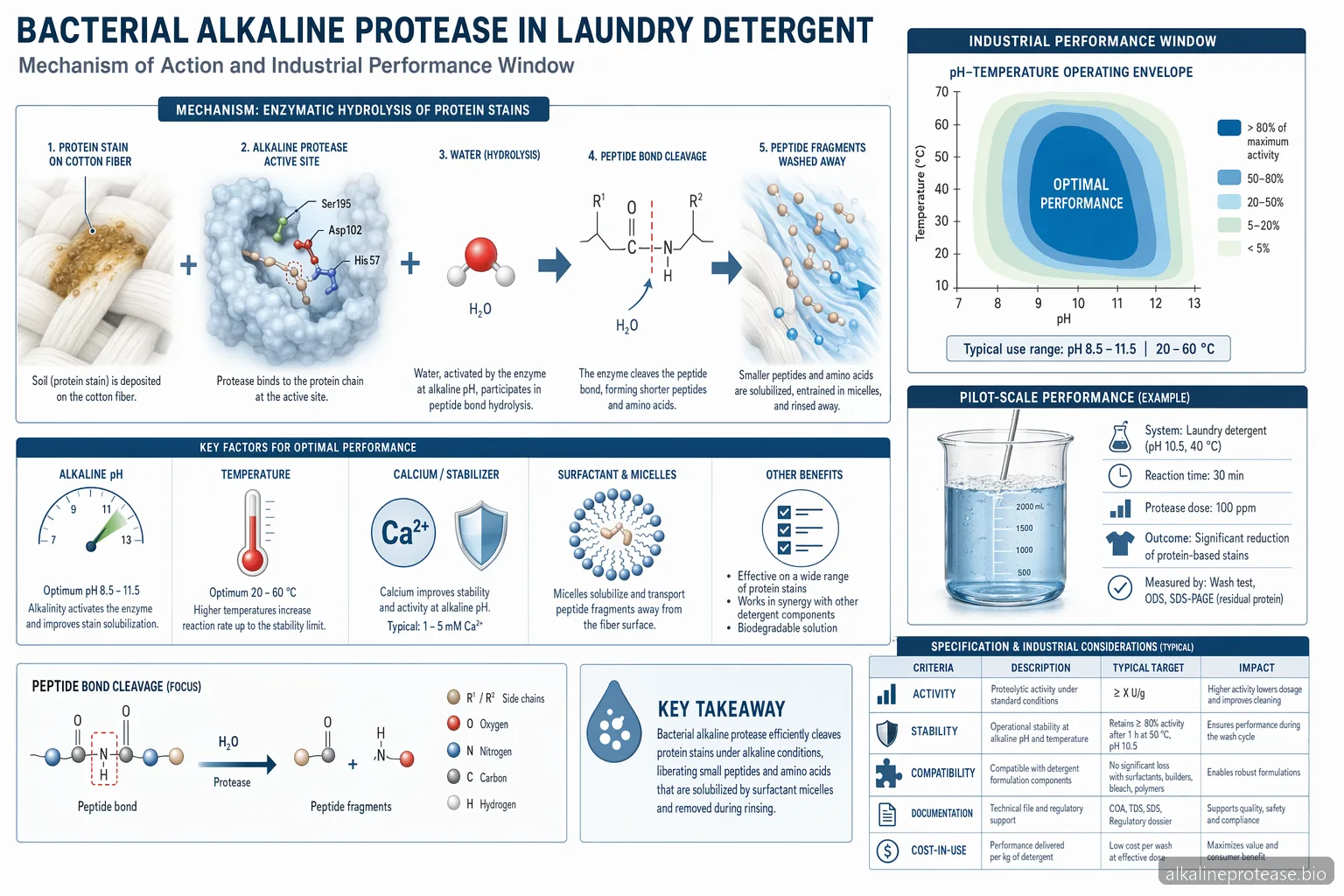
Laundry detergent formulation conditions
For alkaline protease detergent applications, begin screening at realistic use concentrations instead of ideal laboratory conditions. Many detergent developers test formulated enzyme granules at about 0.2 to 1.0 percent of finished powder, or liquid enzyme concentrates at about 0.05 to 0.3 percent, depending on declared activity and target stain performance. These are starting bands, not universal recommendations. The enzyme should be challenged in the actual detergent matrix with anionic and nonionic surfactants, builders, chelants, polymers, optical brighteners, fragrances and preservatives. In powder detergents, moisture control and granule coating help protect activity during storage. In liquid detergents, calcium level, water activity, pH, boron-free stabilization strategy and protease-compatible preservatives can be decisive. Evaluate activity retention after accelerated storage, then confirm cleaning on cotton, polycotton and synthetic fabrics.
Screen wash liquor at pH 8.5, 9.5 and 10.5 where applicable • Test cold wash and warm wash performance, commonly 20, 30, 40 and 60°C • Run compatibility checks with bleach systems before commercial approval • Measure stain removal versus an enzyme-free control
Supplier qualification and documents to request
A qualified alkaline protease supplier should provide more than a price quotation. Request a current Certificate of Analysis, Technical Data Sheet and Safety Data Sheet for each commercial grade under consideration. The COA should identify batch number, activity, appearance, moisture or solids where relevant, and microbiological or contaminant limits when specified. The TDS should explain activity definition, recommended pH and temperature range, storage conditions, shelf-life, packaging and dosage guidance. The SDS should describe occupational exposure controls, allergen and respiratory sensitization precautions, spill handling and transport information. For supplier qualification, review manufacturing consistency, batch traceability, change-control communication, sample availability and technical support during formulation trials. If the supplier references quality systems, ask for verifiable documentation rather than relying on marketing language. Pilot validation should precede purchase contracts.
Request retained-sample policy and lot traceability • Ask for recent batch-to-batch activity variation data • Confirm recommended storage temperature and humidity • Define notification rules for process or specification changes
Pilot validation and cost-in-use comparison
Detergent enzyme purchasing should be based on cost-in-use, not only alkaline protease market price. Two products with similar price per kilogram may differ significantly in declared activity, activity retention, granule dust level, liquid stability and cleaning performance. A practical pilot plan starts with bench compatibility testing, followed by accelerated stability, then standardized wash trials against common protein stains. Compare each candidate at equal activity and at equal cost to understand both technical and economic performance. Use retained samples to monitor activity loss after storage at ambient and elevated temperatures, such as 30 to 40°C, where suitable for your product. For powders, include humidity exposure. For liquids, include freeze-thaw and long-term viscosity observation if relevant. Approve the supplier only after the enzyme supports target cleaning claims without destabilizing the detergent base.
Calculate delivered activity per finished detergent dose • Track activity retention after 4, 8 and 12 weeks of accelerated storage • Use instrumented stain reflectance where possible • Include packaging compatibility in the pilot protocol
Industrial applications beyond laundry
Although this page focuses on laundry detergent, applications of alkaline proteases extend across several industrial sectors. In leather processing, proteases can support soaking, bating and selected dehairing steps, and applications of alkaline proteases in chromium recovery in leather industry may involve hydrolyzing proteinaceous waste streams to help separate or recover chromium-containing fractions under controlled conditions. In seafood processing, applications of alkaline proteases in fish industry include protein hydrolysate production, waste valorization and cleaning of protein residues. Applications of alkaline proteases in fish feed industry include controlled hydrolysis of fish or other protein meals to improve functional characteristics of ingredients, subject to feed regulations and nutritional validation. These alkaline proteases industrial applications illustrate versatility, but each market has different purity, regulatory, residue and performance requirements. Detergent buyers should therefore avoid relying on data from unrelated industries without laundry-specific testing.
Laundry requires detergent compatibility and stain removal data • Leather applications require substrate and effluent-specific validation • Fish and feed uses require food or feed regulatory review • Industrial claims should be tied to the intended process conditions
Technical Buying Checklist
Buyer Questions
The best option is the grade that performs in your detergent matrix at the lowest validated cost-in-use. Start with subtilisin-type bacterial alkaline protease candidates, then compare activity, pH profile, temperature performance, storage stability and compatibility with your surfactants, builders and bleach system. Final selection should be based on pilot wash testing, not supplier literature alone.
Most detergent trials should examine alkaline wash liquor around pH 8.5 to 11 because this is where many laundry formulations operate. The exact pH depends on product format, builder system and regional washing habits. Test enzyme activity and stain removal at several pH points, then confirm stability in the finished detergent during storage.
Before commercial purchase, request a COA, TDS and SDS for the exact grade and batch type. The COA should show activity and key quality results. The TDS should describe activity method, pH and temperature guidance, dosage, storage and shelf-life. The SDS should support safe industrial handling, especially for enzyme dust or aerosols.
Compare suppliers by cost-in-use rather than price per kilogram. Normalize candidates by activity units, required detergent dosage, activity retention after storage, stain removal performance and handling losses. Include freight, packaging, minimum order quantity and technical support. A higher-priced enzyme can be more economical if it remains stable and delivers stronger cleaning at lower dosage.
Data from leather processing, chromium recovery, fish processing or fish feed applications can show that a protease is industrially useful, but it does not prove laundry performance. Detergent use requires separate validation in alkaline wash liquor with your surfactants, builders, fragrances, preservatives and oxidants. Always run detergent-specific compatibility, stability and stain removal tests.
Alkaline Protease for Research & Industry
Need Alkaline Protease for your lab or production process?
ISO 9001 certified · Food-grade & research-grade · Ships to 80+ countries
Frequently Asked Questions
What is the best bacterial alkaline protease for laundry detergent?
The best option is the grade that performs in your detergent matrix at the lowest validated cost-in-use. Start with subtilisin-type bacterial alkaline protease candidates, then compare activity, pH profile, temperature performance, storage stability and compatibility with your surfactants, builders and bleach system. Final selection should be based on pilot wash testing, not supplier literature alone.
What pH range should alkaline protease detergent trials use?
Most detergent trials should examine alkaline wash liquor around pH 8.5 to 11 because this is where many laundry formulations operate. The exact pH depends on product format, builder system and regional washing habits. Test enzyme activity and stain removal at several pH points, then confirm stability in the finished detergent during storage.
Which documents should a protease supplier provide before purchase?
Before commercial purchase, request a COA, TDS and SDS for the exact grade and batch type. The COA should show activity and key quality results. The TDS should describe activity method, pH and temperature guidance, dosage, storage and shelf-life. The SDS should support safe industrial handling, especially for enzyme dust or aerosols.
How should we compare alkaline protease prices from suppliers?
Compare suppliers by cost-in-use rather than price per kilogram. Normalize candidates by activity units, required detergent dosage, activity retention after storage, stain removal performance and handling losses. Include freight, packaging, minimum order quantity and technical support. A higher-priced enzyme can be more economical if it remains stable and delivers stronger cleaning at lower dosage.
Can data from leather or fish industry applications justify detergent use?
Data from leather processing, chromium recovery, fish processing or fish feed applications can show that a protease is industrially useful, but it does not prove laundry performance. Detergent use requires separate validation in alkaline wash liquor with your surfactants, builders, fragrances, preservatives and oxidants. Always run detergent-specific compatibility, stability and stain removal tests.
Related: Alkaline Protease for Detergent and Laundry Formulation
Turn This Guide Into a Supplier Brief Request COA, TDS, SDS and a pilot sample to qualify alkaline protease for your laundry detergent formulation. See our application page for Alkaline Protease for Detergent and Laundry Formulation at /applications/alkaline-protease-detergent-laundry/ for specs, MOQ, and a free 50 g sample.
Contact Us to Contributehello@mail.alkalineprotease.bio