Application of Alkaline Protease Enzyme: Dosage, pH, and Temperature in Laundry Detergent
Troubleshoot alkaline protease dosage, pH, temperature, QC, and supplier qualification for industrial laundry detergent formulations.
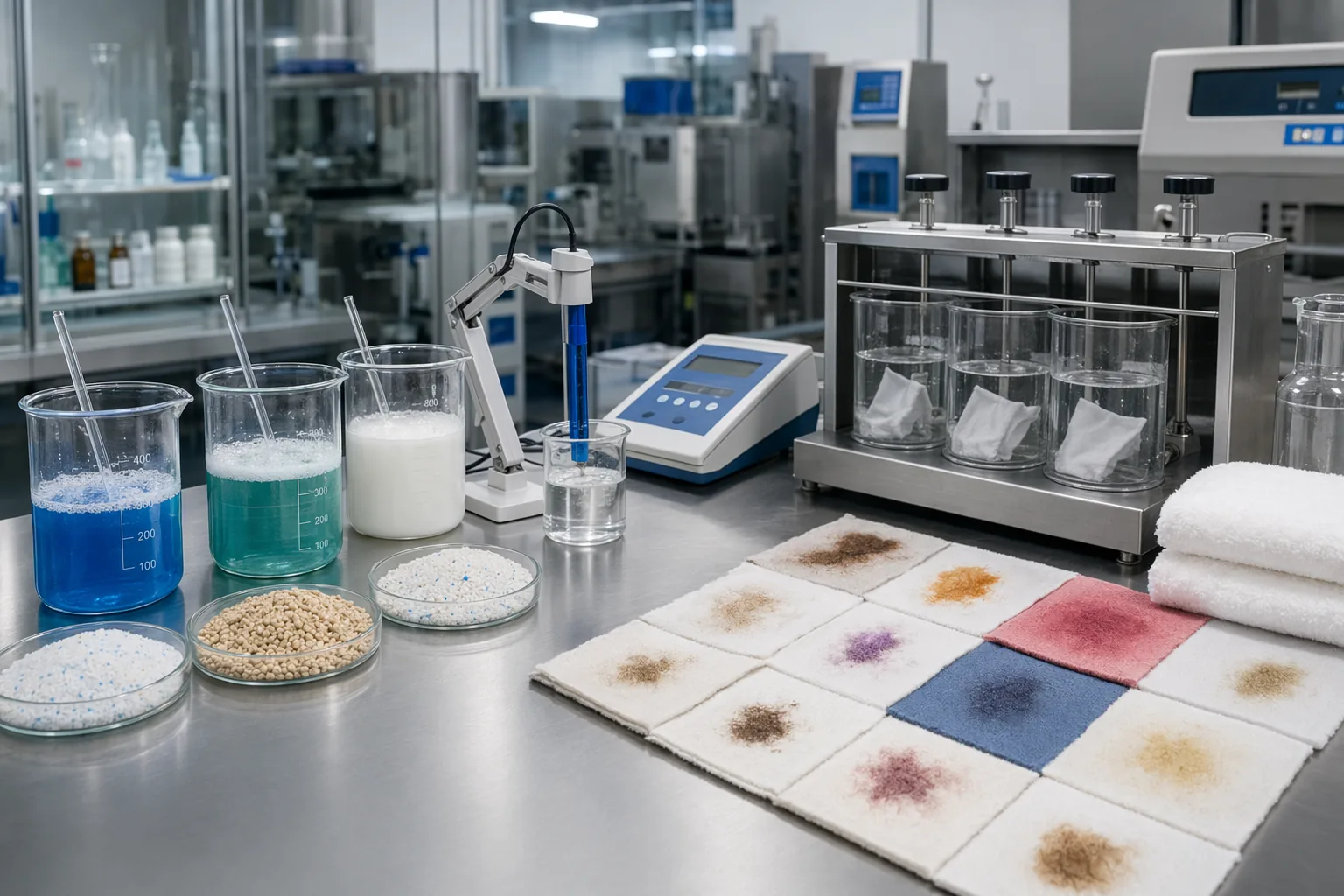
A practical B2B guide for detergent formulators troubleshooting alkaline protease enzyme performance, stability, and cost-in-use before scale-up.
Why Alkaline Protease Is Used in Laundry Detergent
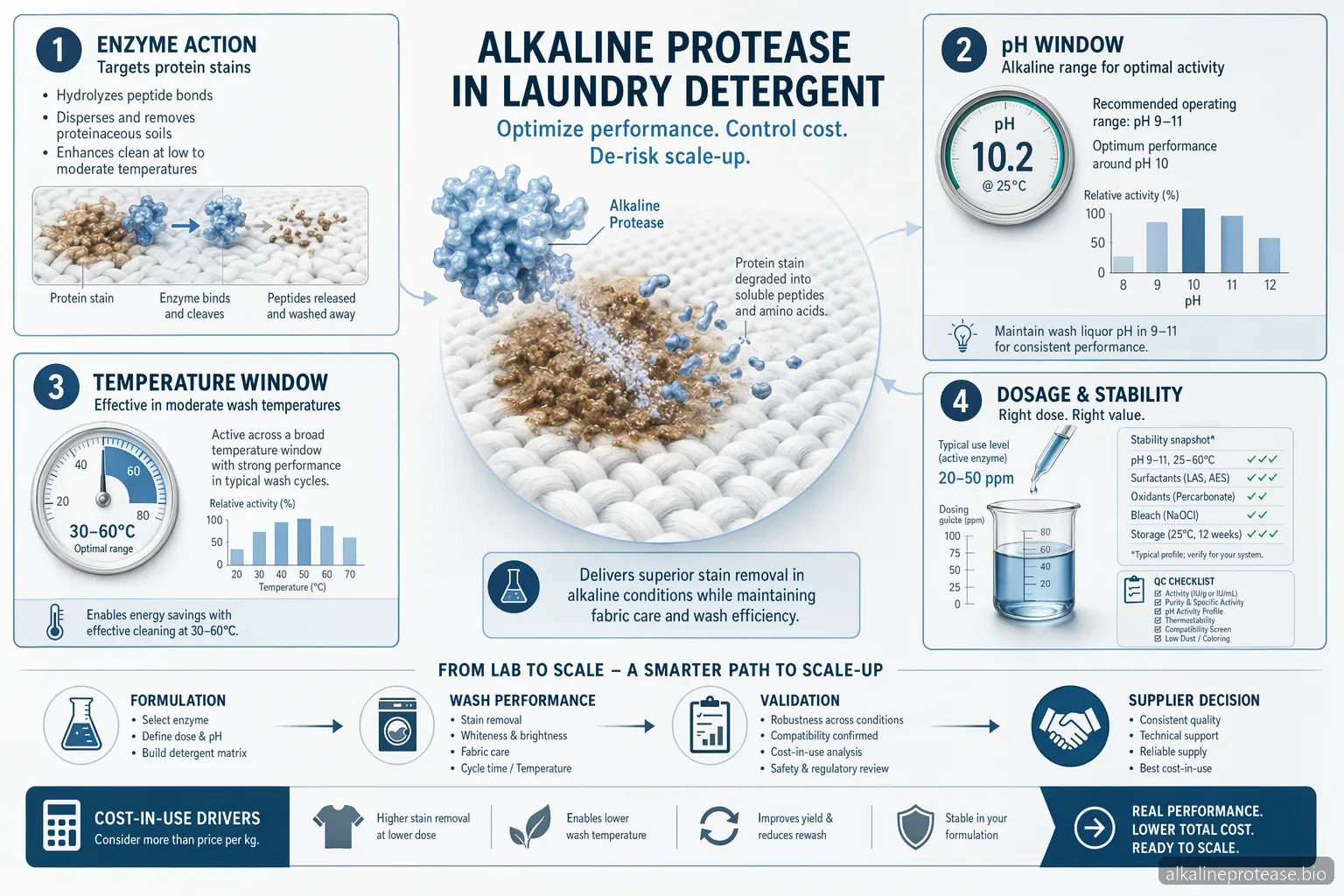
The main application of alkaline protease enzyme in laundry detergent is hydrolysis of protein-based soils such as blood, egg, milk, grass, sweat, and food residues. In powder, tablet, and liquid detergents, the alkaline protease enzyme helps break large insoluble proteins into smaller soluble peptides that can be lifted by surfactants and rinsed away. Many industrial detergent proteases are subtilisin-type enzymes produced by Bacillus strains, selected for activity under alkaline wash conditions. For formulators, the goal is not simply high enzyme activity on a datasheet; it is stable, repeatable cleaning performance after blending, storage, transportation, and consumer use. A strong alkaline protease application program connects enzyme selection to the detergent format, wash pH, regional washing habits, and target stains. This is especially important for institutional laundry, private-label detergent production, and contract manufacturing where cost, stability, and claims support must be validated.
Primary target soils: blood, dairy, egg, sweat, grass, and food proteins • Common enzyme family: subtilisin-type alkaline protease • Best evaluated in the final detergent matrix, not only in buffer tests
Recommended pH, Temperature, and Dosage Starting Points
For troubleshooting, begin with the operating window rather than a fixed dose. Many alkaline protease detergent systems are screened at pH 8.5–11.0, with practical wash temperatures from 20–60 °C. Cold-wash products often need enzyme grades that retain useful activity at 20–30 °C, while institutional or heavy-duty systems may prioritize performance at 40–60 °C. Dosage should be based on declared activity units from the supplier’s TDS and confirmed by stain-panel testing. As an initial lab screen, formulators often compare several dosage bands, such as low, medium, and high enzyme activity additions, then calculate cost-in-use against stain removal. Avoid copying a competitor dosage because granule activity, liquid concentrate strength, moisture level, and formulation stress vary widely. Overdosing can increase cost without proportional cleaning improvement, while underdosing can make protein stains appear after drying or ironing.
Typical screening pH: 8.5–11.0 • Typical wash temperature range: 20–60 °C • Dose by activity units, not only by weight percentage • Validate stain removal before setting commercial dosage
Common Causes of Protease Performance Loss
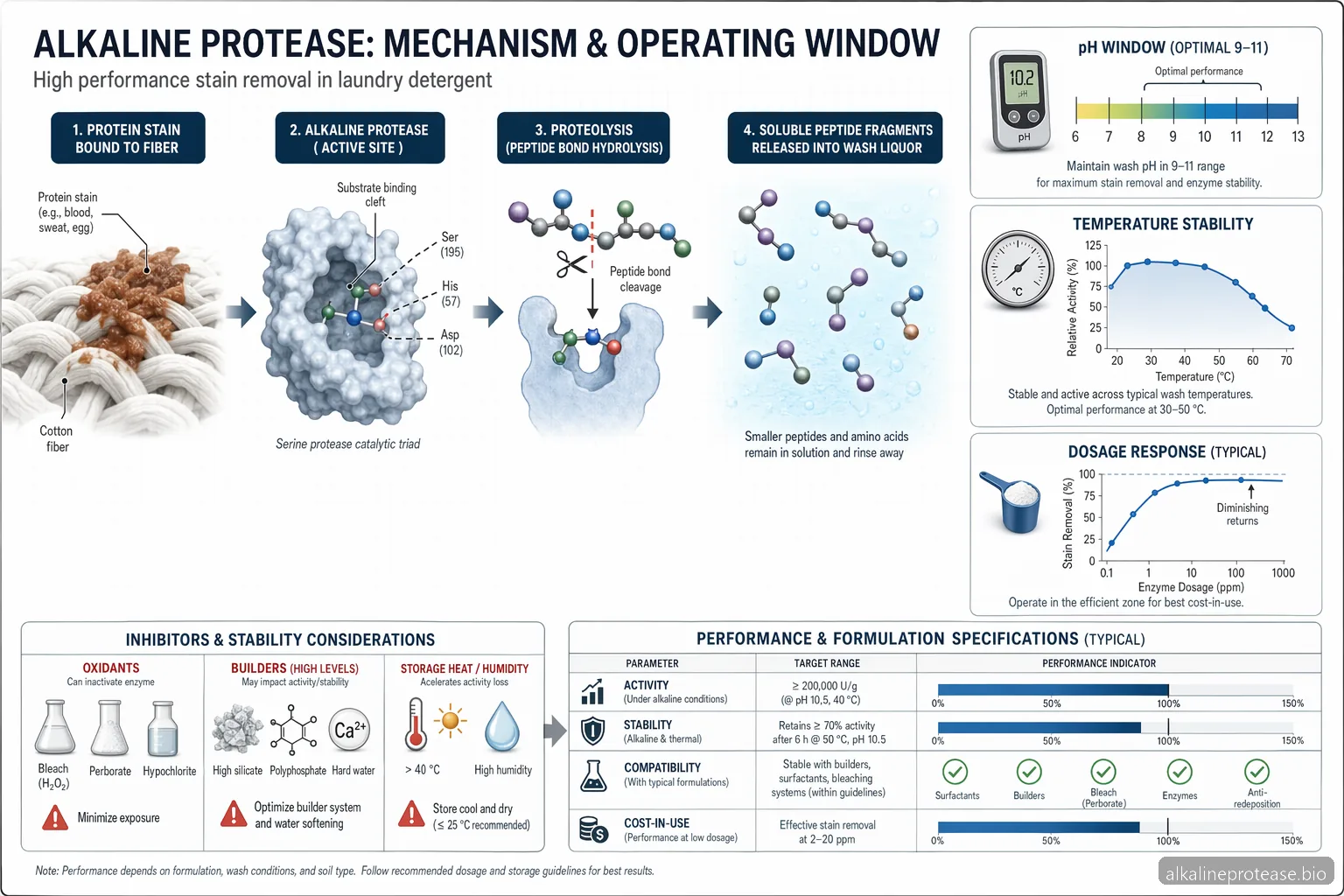
If an alkaline protease detergent trial underperforms, investigate formulation compatibility before rejecting the enzyme. Oxidizing bleaches, high-water liquid systems, extreme alkalinity, heavy-metal contamination, and aggressive solvents can reduce activity during storage. Some surfactant systems improve soil removal but may also destabilize enzyme proteins if concentration, water activity, or pH is poorly controlled. In powder detergent, granule coating integrity and moisture control are critical because dusting, abrasion, or high humidity can reduce enzyme availability and create handling concerns. In liquid detergent, enzyme stabilizers, calcium balance, borate-free alternatives, preservatives, and microbial control must be evaluated together. Perfume components and dyes should also be screened because some can affect long-term activity. Troubleshooting should compare fresh product, aged product, and wash liquor activity, then link enzyme loss to a specific processing or storage variable.
Check oxidant exposure and bleach compatibility • Control moisture in powder and water activity in liquid • Screen perfume, dye, preservative, and solvent interactions • Compare fresh and aged detergent performance
Pilot Validation and Quality Control Checks
Before commercial approval, run pilot validation using the same process order, mixing energy, temperature, and packaging planned for production. QC should include enzyme activity assay, detergent pH, moisture or water activity, appearance, bulk density for powders, viscosity for liquids, and storage stability under relevant warehouse conditions. Stain-panel testing should include protein soils and mixed soils because real laundry rarely contains a single stain type. Use control formulations without protease and with alternative protease grades to confirm that performance improvement is enzyme-driven. Request the supplier’s COA for each lot, plus TDS and SDS for handling, storage, and safety planning. For regulated internal procurement, keep records of activity method, lot traceability, recommended storage temperature, shelf-life basis, and allergen/dust exposure controls. A pilot that measures only immediate cleaning can miss delayed failures caused by enzyme inactivation during distribution.
Run fresh and accelerated storage samples • Use positive and negative detergent controls • Confirm activity assay method and lot traceability • Review COA, TDS, and SDS before approval
Supplier Qualification and Cost-in-Use Decisions
Industrial buyers should qualify an alkaline protease enzyme supplier on technical fit, lot consistency, documentation, logistics, and application support. The lowest price per kilogram may not deliver the lowest cost-in-use if activity is lower, stability is weaker, or higher dosage is required. Ask for multiple pilot lots when possible, not only a single sample, and compare activity retention after storage in your exact detergent base. For the USA alkaline protease enzyme market, procurement teams may also consider local warehousing, lead time, import documentation, and batch release responsiveness. Academic work such as optimization of extracellular alkaline protease enzyme from Bacillus sp Kanchana, or from Bacillus sp generally, is useful background, but commercial selection must be based on validated production lots. The same enzyme category is used in industrial alkaline protease enzyme leather processing and silk degumming, but laundry detergents require detergent-specific stability and cleaning validation.
Compare cost per wash or cost per metric ton of detergent • Request pilot-lot and commercial-lot consistency data • Confirm supply continuity, lead time, and documentation quality • Do not substitute leather or silk data for laundry validation
Technical Buying Checklist
Buyer Questions
There is no universal dosage because enzyme activity, detergent format, wash pH, temperature, and target stains differ. Start with the supplier’s recommended activity-unit range from the TDS, then run low, medium, and high dosage trials in your own formulation. Compare protein stain removal, aged stability, and cost-in-use. The best dosage is the lowest validated addition rate that meets cleaning and shelf-life requirements.
Storage failure usually indicates compatibility or process stress. Common causes include oxidizing bleach exposure, high water activity, pH drift, incompatible perfume or dye, aggressive solvents, high moisture in powder, or insufficient stabilizer system in liquid detergent. Test enzyme activity in fresh and aged detergent, not only in buffer. Also confirm that processing temperature and mixing order are not damaging the protease before packaging.
The same enzyme class may appear in laundry detergent, industrial alkaline protease enzyme leather processing, and industrial alkaline protease enzyme silk degumming, but the operating requirements are different. Leather and silk applications focus on controlled protein modification under textile or hide processing conditions. Laundry detergent needs stability with surfactants, builders, perfumes, and storage. Always validate the enzyme in the exact application and matrix.
Request a current COA for the supplied lot, TDS with activity definition and application guidance, SDS for safe handling, recommended storage conditions, shelf-life basis, and lot traceability information. For production approval, ask for pilot-lot consistency data, activity assay method, and packaging details. These documents help procurement, R&D, QC, EHS, and manufacturing teams evaluate supplier reliability and formulation risk.
Compare suppliers using the same detergent base, dosage by activity units, identical wash conditions, and matched storage studies. Measure protein stain removal, activity retention, odor or appearance changes, processing ease, documentation quality, lead time, and technical support. Convert results to cost per wash or cost per metric ton of finished detergent. A cheaper enzyme can be more expensive if it requires higher dosage or loses activity faster.
Alkaline Protease for Research & Industry
Need Alkaline Protease for your lab or production process?
ISO 9001 certified · Food-grade & research-grade · Ships to 80+ countries
Frequently Asked Questions
What is the best dosage for alkaline protease enzyme in laundry detergent?
There is no universal dosage because enzyme activity, detergent format, wash pH, temperature, and target stains differ. Start with the supplier’s recommended activity-unit range from the TDS, then run low, medium, and high dosage trials in your own formulation. Compare protein stain removal, aged stability, and cost-in-use. The best dosage is the lowest validated addition rate that meets cleaning and shelf-life requirements.
Why does alkaline protease work in the lab but fail after storage?
Storage failure usually indicates compatibility or process stress. Common causes include oxidizing bleach exposure, high water activity, pH drift, incompatible perfume or dye, aggressive solvents, high moisture in powder, or insufficient stabilizer system in liquid detergent. Test enzyme activity in fresh and aged detergent, not only in buffer. Also confirm that processing temperature and mixing order are not damaging the protease before packaging.
Can the same alkaline protease be used for laundry, leather, and silk?
The same enzyme class may appear in laundry detergent, industrial alkaline protease enzyme leather processing, and industrial alkaline protease enzyme silk degumming, but the operating requirements are different. Leather and silk applications focus on controlled protein modification under textile or hide processing conditions. Laundry detergent needs stability with surfactants, builders, perfumes, and storage. Always validate the enzyme in the exact application and matrix.
What documents should a B2B buyer request before approving a supplier?
Request a current COA for the supplied lot, TDS with activity definition and application guidance, SDS for safe handling, recommended storage conditions, shelf-life basis, and lot traceability information. For production approval, ask for pilot-lot consistency data, activity assay method, and packaging details. These documents help procurement, R&D, QC, EHS, and manufacturing teams evaluate supplier reliability and formulation risk.
How should we compare two alkaline protease enzyme suppliers?
Compare suppliers using the same detergent base, dosage by activity units, identical wash conditions, and matched storage studies. Measure protein stain removal, activity retention, odor or appearance changes, processing ease, documentation quality, lead time, and technical support. Convert results to cost per wash or cost per metric ton of finished detergent. A cheaper enzyme can be more expensive if it requires higher dosage or loses activity faster.
Related: Alkaline Protease for Detergent and Laundry Formulation
Turn This Guide Into a Supplier Brief Request a technical discussion, sample plan, COA/TDS/SDS review, and pilot validation support for your laundry detergent formulation. See our application page for Alkaline Protease for Detergent and Laundry Formulation at /applications/alkaline-protease-detergent-laundry/ for specs, MOQ, and a free 50 g sample.
Contact Us to Contributehello@mail.alkalineprotease.bio