Alkaline Protease for Leather Bating and Hide Soaking
Remove non-structural proteins and soften hides in tannery bating and soaking operations using alkaline protease at pH 8.0–10.0 and 30–40°C.
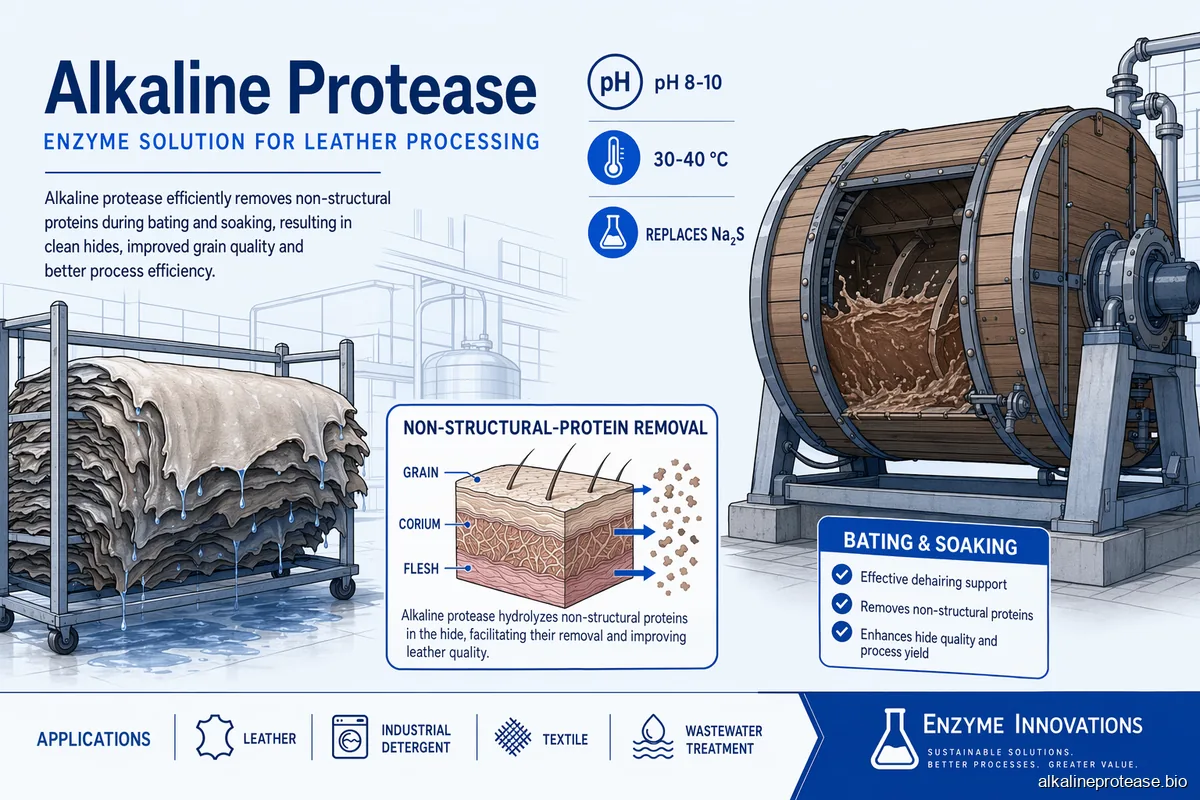
Leather tanneries process raw hides through a sequence of wet-processing steps — soaking, liming, bating, pickling, and tanning — each designed to condition the hide for optimal tanning penetration and final leather quality. Two of these steps are particularly well-suited to alkaline protease application: soaking and bating. In soaking, raw salted or dried hides must be rehydrated and cleaned of blood, dung, and putrefactive bacteria before liming. Alkaline protease in the soak bath assists by hydrolysing surface protein contaminants, accelerating rehydration, and improving microbial cleanliness of the hides. At pH 8.0–9.5 and 25–35°C, a dosage of 0.01–0.1% on hide weight is typically effective. In bating — the step following liming and deliming, carried out at pH 7.5–9.5 and 35–40°C — alkaline protease removes non-structural proteins from the corium: elastin, non-fibrous proteins, and degraded collagen fragments that contribute to hide stiffness, foul grain, and poor tanning penetration. Traditional bating used pancreatic enzymes (trypsin and chymotrypsin from pig pancreas), but alkaline protease from Bacillus licheniformis provides an equivalent profile with more consistent supply, standardised activity, and greater pH stability across the bating range. Controlled bating with Bacillus-derived protease produces hides with controlled softness, improved grain clarity, and consistent tanning uptake. Overdosage must be avoided to prevent excessive loosening or grain damage; the optimum dose is species- and hide-weight-specific and is confirmed through plant trials. For heavy cattle hides for shoe upper leather, bating is moderate; for glove leather and garment leather, more intense bating is required to achieve maximum softness. Dosage ranges from 0.05–0.3% on pelt weight for bating, with enzyme activity and contact time adjusted to the leather type. Our alkaline protease is produced from Bacillus licheniformis at 100,000–200,000 U/g, has confirmed stability at pH 8.0–11.0 and 40–60°C, and is supplied with COA, TDS, and MSDS. Custom activity grades for tannery procurement are available.
Hide Soaking and Rehydration
Alkaline protease at 0.01–0.05% on hide weight in the soak bath (pH 8.5–9.5, 25–35°C) accelerates rehydration of salted hides, hydrolyses surface protein contaminants, and reduces soaking time by 20–30%. Cleaner hides entering the liming step reduce chemical carry-over and improve subsequent processing efficiency. Bactericidal biocide co-dosing is recommended to prevent putrefaction during extended soaks.
Cattle Hide Bating for Shoe Upper Leather
Moderate bating of cattle hides for shoe upper leather uses alkaline protease at 0.05–0.15% on pelt weight (pH 8.0–9.0, 35–38°C, 60–120 minutes). The enzyme removes elastin and non-structural proteins from the grain layer, producing clean grain, improved temper, and consistent tanning penetration. Activity must be calibrated to avoid over-bating that softens the grain excessively.
Soft Leather Bating (Garment and Glove)
Garment and glove leathers require intensive bating to achieve high softness and drape. Alkaline protease at 0.15–0.30% on pelt weight, extended contact time (2–4 hours), and slightly higher temperature (38–42°C) at pH 8.0–9.0 removes non-fibrous proteins extensively, producing a highly extensible, soft corium. Careful pH and temperature control is essential to avoid collagen hydrolysis.
Sodium Sulfide Reduction in Dehairing
Although alkaline protease is not a true dehairing enzyme, it is used in combination with reduced sodium sulfide to loosen hair from the follicle and reduce the total sulfide load in the liming effluent. At pH 9.5–11.0 and 30–35°C, a combination of low-dose sodium sulfide and alkaline protease improves hair removal while reducing the sulfide concentration required, lowering effluent treatment costs.
| Parameter | Value |
| Activity range | 100,000 – 200,000 U/g |
| Optimal pH | 8.0 – 10.0 |
| Optimal temperature | 30°C – 45°C |
| Form | White to light tan powder |
| Shelf life | 12 months (sealed, cool, dry place) |
| Packaging | 25 kg drums / custom packaging |
Frequently Asked Questions
What is alkaline protease bating in leather processing?
Bating is a tannery operation carried out after liming and deliming to remove non-structural proteins from the hide corium. These proteins — elastin, non-fibrous polypeptides, and degraded collagen — contribute to hide stiffness, grain unevenness, and poor tanning penetration. Alkaline protease hydrolyses these proteins selectively at pH 7.5–9.5 and 35–40°C, producing hides with controlled softness, clean grain surface, and consistent tanning uptake.
Can alkaline protease replace pancreatic enzymes in leather bating?
Yes. Bacillus licheniformis-derived alkaline protease provides equivalent bating efficacy to trypsin-based pancreatic preparations, with more consistent activity, standardised supply, and better pH stability above pH 8.5. Unlike pancreatic preparations, which are by-products of the meatpacking industry and subject to supply variability, Bacillus alkaline protease is produced by controlled fermentation with predictable activity per batch. Dosage equivalence should be established through plant trials.
How is alkaline protease dosage controlled in bating to prevent over-softening?
Bating intensity is controlled by adjusting enzyme dosage, temperature, pH, and contact time. Standard control points include a float test (hide floats = under-bated, sinks slowly = correct bating), vein test (blood vessel visibility on flesh side), and grain appearance assessment. Reducing dosage, lowering temperature, or shortening contact time reduces bating intensity. For new hide types or formulations, gradual dosage trials starting at the lower end of the dosage range are recommended.
What documentation is provided for tannery procurement?
We provide COA with protease activity (casein method, U/g), TDS covering pH and temperature profiles relevant to bating and soaking conditions, MSDS, and ISO 9001 certification. For tannery compliance, we can provide information on the absence of heavy metals and biocide contaminants. Halal and Kosher certification is also available for tanneries supplying leather to markets with religious compliance requirements.
Request Alkaline Protease for Leather Processing
Specify your application and process parameters. We'll recommend an activity grade, send a free 100 g sample with COA/TDS, and quote bulk pricing within 24 hours.
Get Quote