Alkaline Protease for Animal Feed Protein Hydrolysis
Improve protein availability and amino acid digestibility in aquaculture and poultry feed by hydrolysing soy, fishmeal, and plant protein under alkaline conditions.
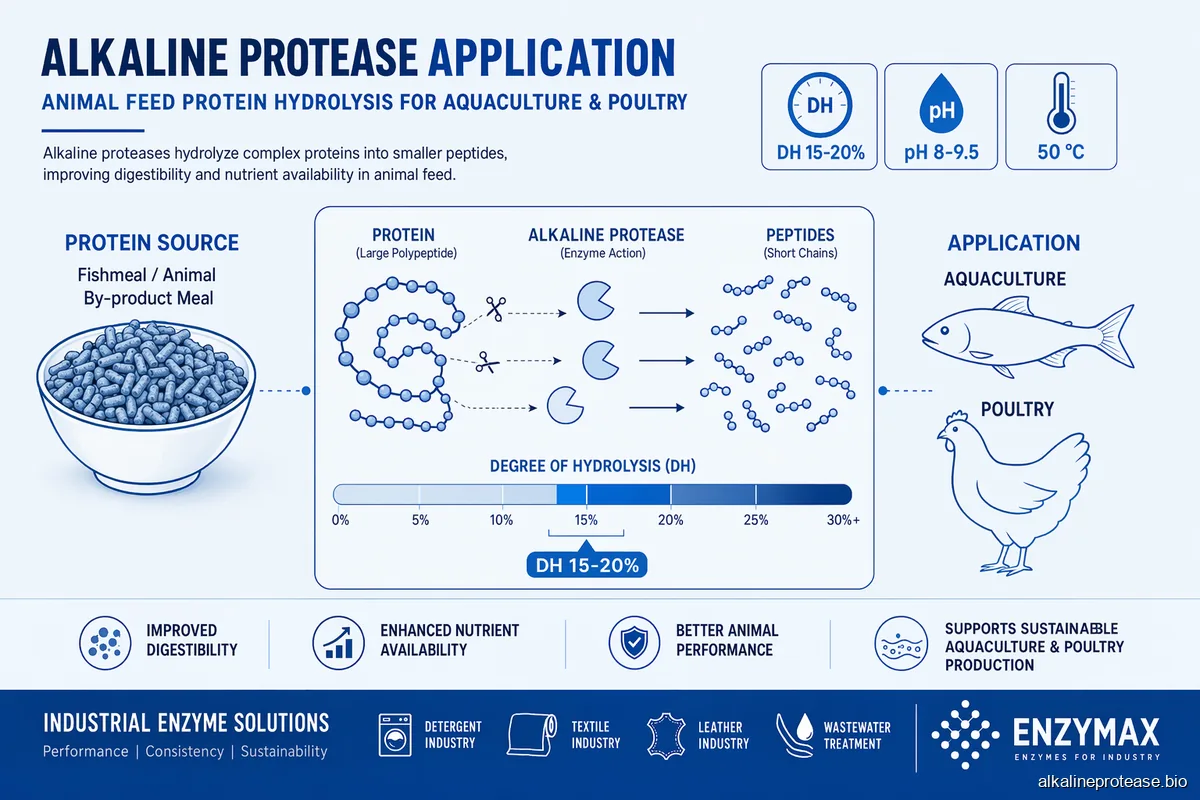
Protein digestibility is the central efficiency variable in commercial aquaculture and poultry nutrition. Feed-grade proteins — fishmeal, soy protein concentrate, canola meal, cottonseed meal, and DDGS — vary substantially in their in vivo digestibility depending on protein solubility, anti-nutritional factor content, and molecular weight distribution. Fish and shrimp, in particular, have short digestive tracts and depend heavily on the availability of soluble peptides and free amino acids for rapid absorption. Poultry similarly require high ileal amino acid digestibility to meet growth targets on modern commercial rations. Alkaline protease (EC 3.4.21.62) applied in feed processing — either directly in the feed mill or in a pre-digestion step — improves protein availability through partial hydrolysis of intact protein chains. This reduces average peptide molecular weight, increases solubility, and pre-digests trypsin inhibitors and other anti-nutritional factors that reduce endogenous protease efficiency in the gut. In extrusion-based aquafeed, alkaline protease is typically applied as a post-extrusion coating at 0.05–0.2% on feed weight, or as a pre-hydrolysis step on the protein ingredient before inclusion. In the pre-hydrolysis approach, fishmeal or soy protein is incubated with alkaline protease at pH 8.0–9.5 and 45–55°C for 30–120 minutes to achieve 10–20% degree of hydrolysis (DH), producing a hydrolysate that improves feed conversion ratio, reduces dietary inclusion levels of expensive protein ingredients, and may improve palatability. For poultry, alkaline protease in the diet can also improve ileal digestibility of amino acids from plant proteins, which are typically less digestible than animal proteins. Published trials in broilers show 2–5 percentage point improvements in ileal amino acid digestibility for lysine and threonine from soy protein when alkaline protease is included. Our alkaline protease from Bacillus licheniformis is active across pH 8.0–11.0, stable at 40–60°C, and is supplied at 100,000–200,000 U/g with food and feed-grade certifications including ISO 9001, HALAL, and KOSHER.
Aquafeed Protein Pre-Hydrolysis
Fishmeal or soy protein concentrate is incubated with alkaline protease at pH 8.5–9.5 and 50°C for 60–120 minutes to achieve 15–20% degree of hydrolysis. The resulting hydrolysate contains short peptides (di- and tripeptides) that are rapidly absorbed by fish and shrimp with short digestive tracts. Pre-hydrolysis can reduce dietary fishmeal inclusion requirements by 10–15% while maintaining growth performance in tilapia, salmon, and shrimp.
Post-Extrusion Enzyme Coating in Aquafeed
Alkaline protease applied as a post-extrusion spray coating at 0.05–0.15% on pelleted aquafeed activates in the gut environment, supplementing the fish's endogenous protease activity. This is particularly effective in warm-water species with lower endogenous protease activity, improving apparent digestibility coefficient (ADC) for protein by 3–6 percentage points in feeding trials.
Poultry Diet Soy Protein Digestibility
Plant proteins in poultry diets — soy meal, canola, sunflower — contain trypsin inhibitors, lectins, and phytate complexes that reduce protein digestibility. Alkaline protease at 50–150 g/tonne in poultry diets can denature trypsin inhibitors and initiate partial hydrolysis of plant proteins, improving ileal digestibility of limiting amino acids (lysine, threonine) by 2–5 percentage points and supporting better FCR.
Single-Cell Protein and Insect Meal Hydrolysis
Novel protein sources — single-cell protein, black soldier fly meal, duckweed protein — often have cell wall structures or chitin content that reduces protein accessibility. Alkaline protease pre-treatment at pH 8.0–9.0 and 45–50°C for 60–90 minutes improves protein extraction efficiency and digestibility of these emerging ingredients, supporting formulation trials for sustainable aqua and poultry feed programs.
| Parameter | Value |
| Activity range | 100,000 – 200,000 U/g |
| Optimal pH | 8.0 – 9.5 |
| Optimal temperature | 40°C – 60°C |
| Form | White to light tan powder |
| Shelf life | 12 months (sealed, cool, dry place) |
| Packaging | 25 kg drums / custom packaging |
Frequently Asked Questions
How does alkaline protease improve protein digestibility in animal feed?
Alkaline protease partially hydrolyses intact proteins in feed ingredients into shorter peptides and amino acids. This increases protein solubility, reduces the work required of the animal's own endogenous proteases, and can deactivate anti-nutritional factors like trypsin inhibitors in soy. The result is higher apparent digestibility of protein and amino acids, leading to better feed conversion ratio and growth performance in fish, shrimp, and poultry.
What is degree of hydrolysis (DH) and what level is targeted in feed applications?
Degree of hydrolysis (DH) measures the percentage of peptide bonds cleaved during enzymatic hydrolysis, expressed as a percentage of total peptide bonds. For feed pre-hydrolysis, a DH of 10–20% is typically targeted — sufficient to improve solubility and digestibility without creating excessive bitterness (from hydrophobic peptides released at high DH) or nutrient losses from very short peptides. DH is controlled by adjusting enzyme dose, temperature, pH, and reaction time.
Can alkaline protease survive extrusion for direct inclusion in pelleted feed?
Standard alkaline protease is inactivated at the temperatures used in extrusion (120–140°C). For direct inclusion in extruded feed, it must be applied as a post-extrusion coating, not premixed before extrusion. Post-extrusion spray coating at 0.05–0.15% on feed weight preserves enzyme activity. For mash or cold-pelleted feeds where temperatures stay below 70°C, direct inclusion is feasible with thermostabilised grades.
What certifications are available for alkaline protease in feed applications?
Our alkaline protease carries ISO 9001, HALAL, and KOSHER certifications, and is available in food-grade and feed-grade formats. For aquafeed and poultry feed procurement, we supply COA with protease activity basis, TDS covering pH and temperature activity profiles, MSDS, and allergen declarations. Country-of-origin documentation and microbial safety data (total plate count, pathogen absence) are available on request.
Request Alkaline Protease for Feed Protein Hydrolysis
Specify your application and process parameters. We'll recommend an activity grade, send a free 100 g sample with COA/TDS, and quote bulk pricing within 24 hours.
Get Quote